Fish species in Iceland
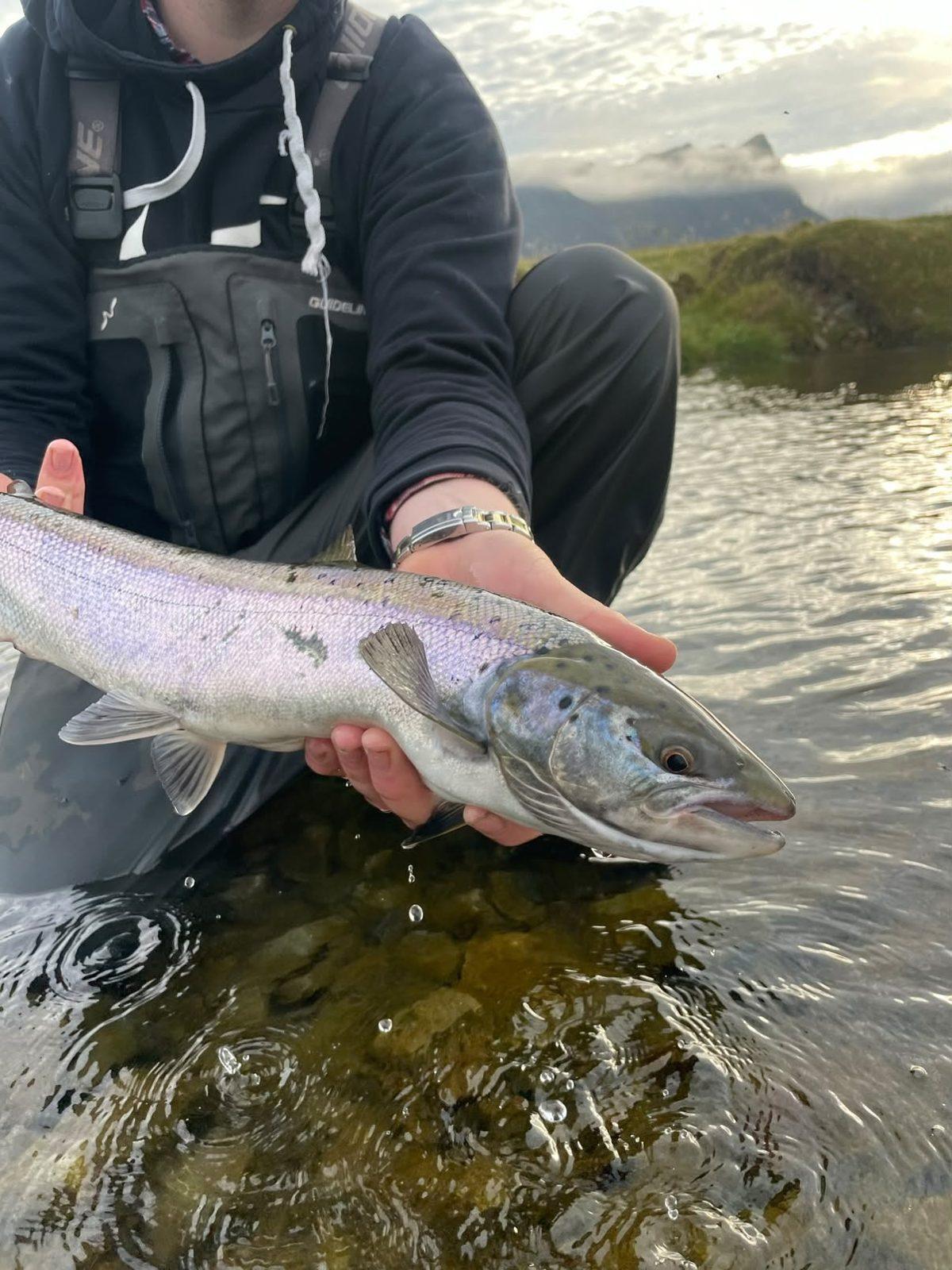
Only five fish species are native to Icelandic fresh waters, and three of them are what anglers come for: Atlantic salmon, brown trout and Arctic char. Both trout and char live as resident fish in rivers and lakes, and as sea-run fish that feed in the ocean and return to the rivers.
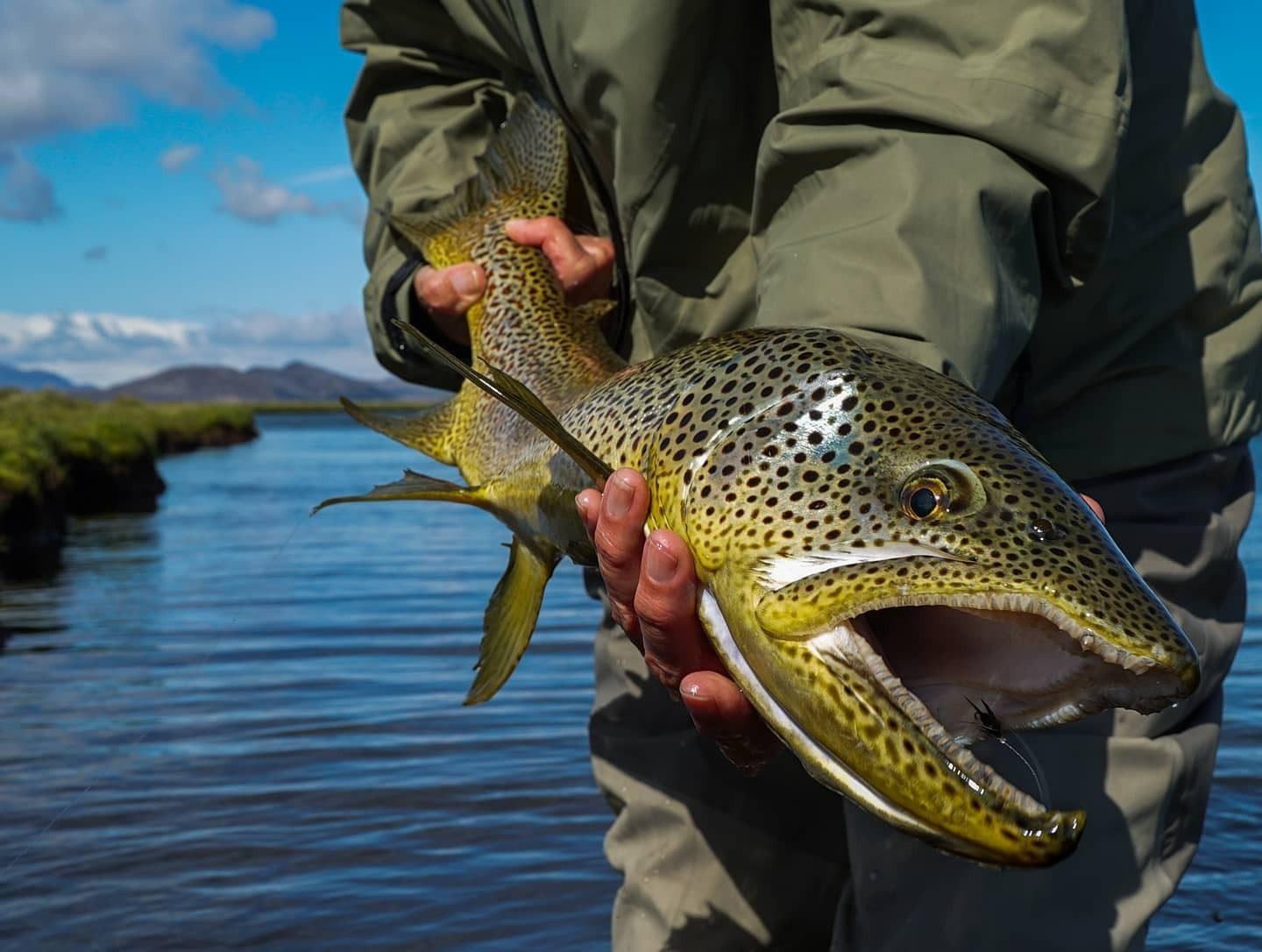
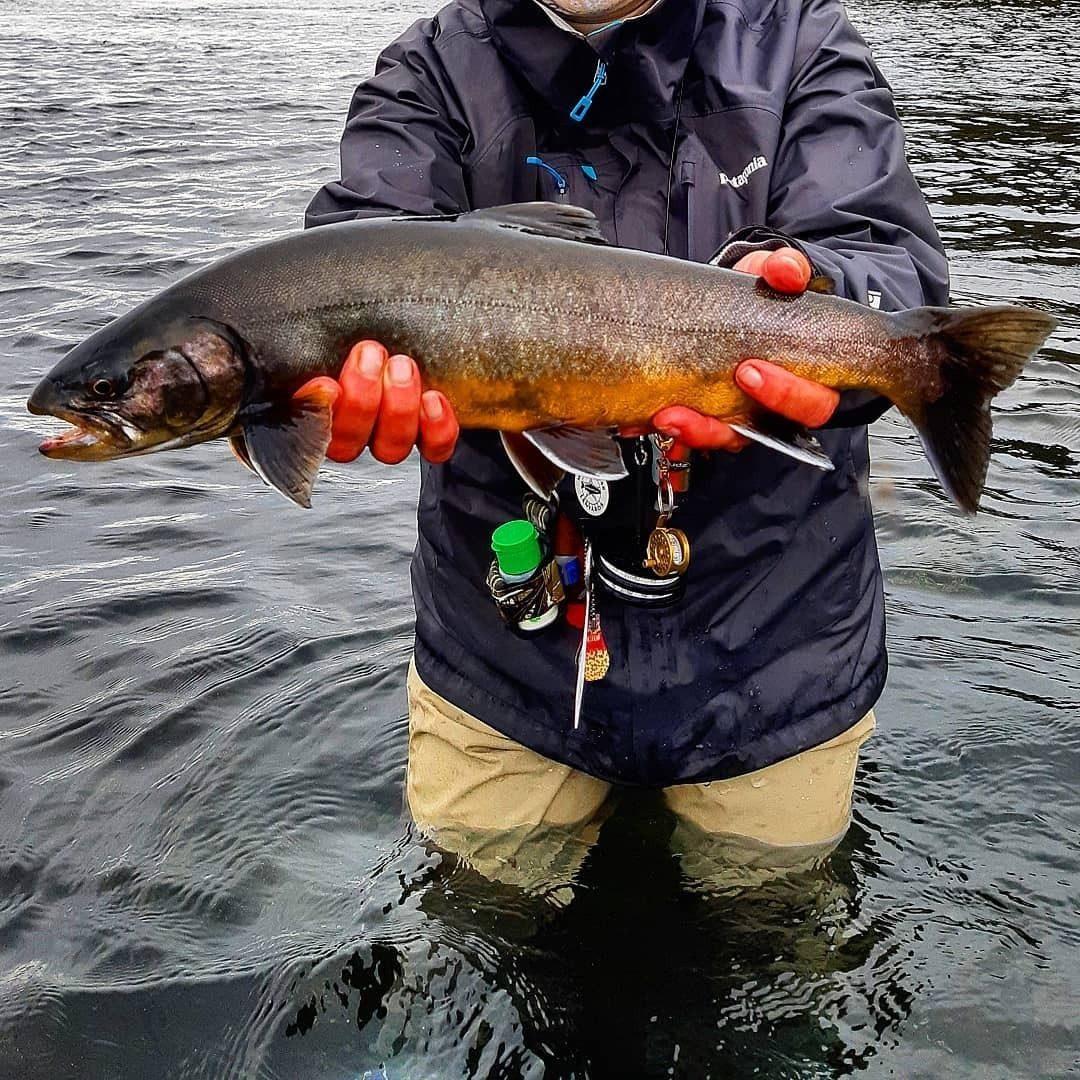
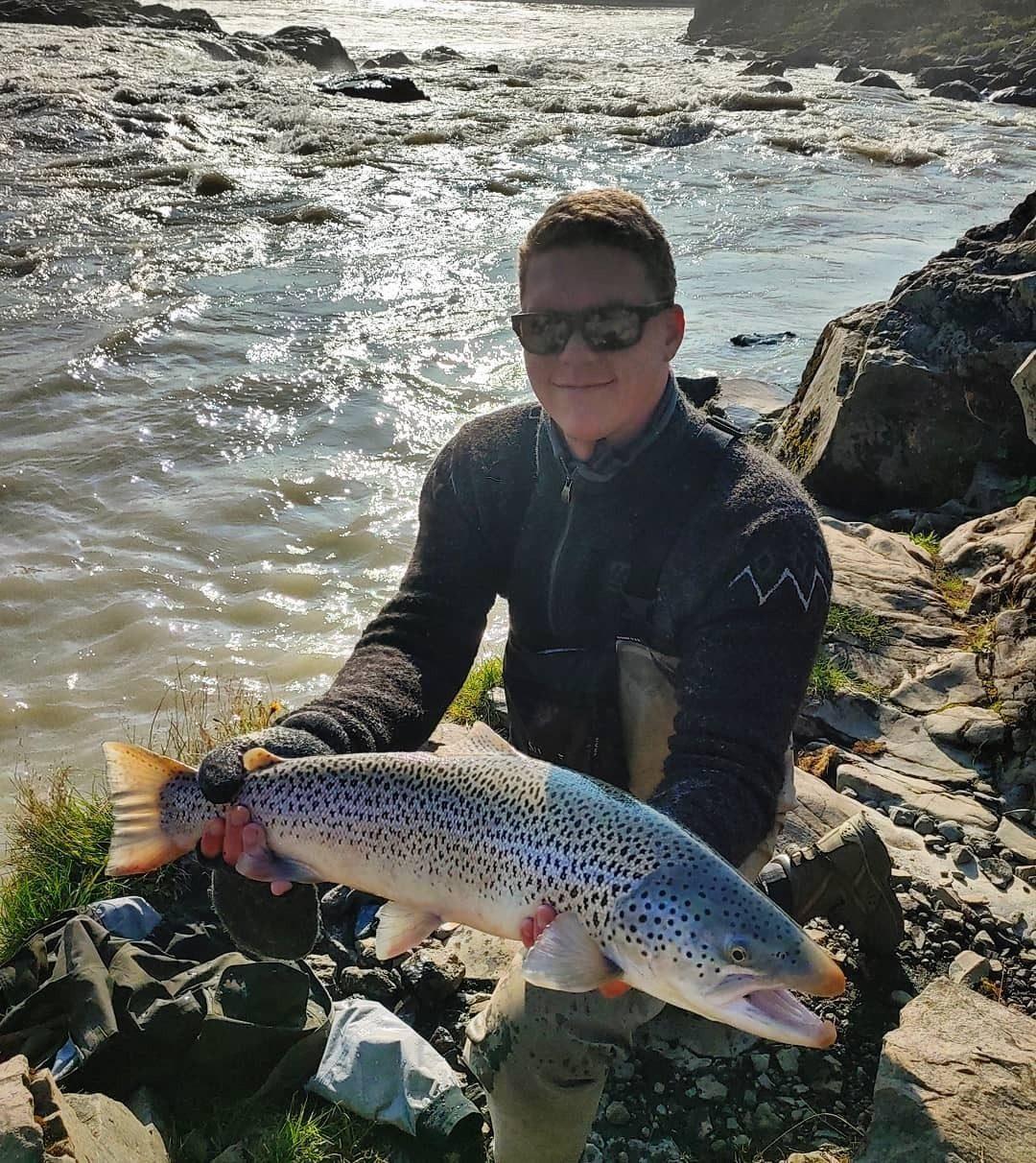
| Species | Where | Best time | Notes |
|---|---|---|---|
| Brown trout | Rivers and lakes across the country | April to September | Spring is often best for big browns; Lake Þingvallavatn gives several fish over 20 lb every year |
| Arctic char | Spring-fed rivers and lakes | May to September | Sight fishing in crystal-clear water; fish up to about 6 lb in some rivers |
| Sea trout | Coastal rivers, especially in the south | April to October | Biggest in the south-east, with fish over 20 lb at Vatnamót; prime time September and October |
| Atlantic salmon | Around 100 salmon rivers | June to September, peak July to August | Fly-only on most rivers in the main season |
The ice-age brown trout of Lake Þingvallavatn
Lake Þingvallavatn is Iceland's largest natural lake, 84 km² and up to 114 m deep, about 45 minutes' drive from Reykjavík. It lies in a rift valley where the North American and Eurasian plates drift apart, inside Þingvellir National Park, a UNESCO World Heritage Site.
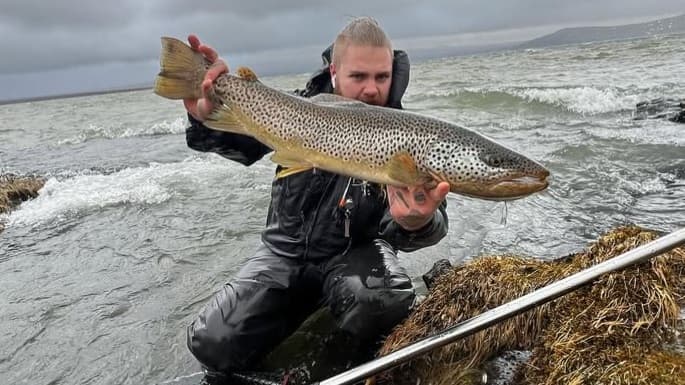
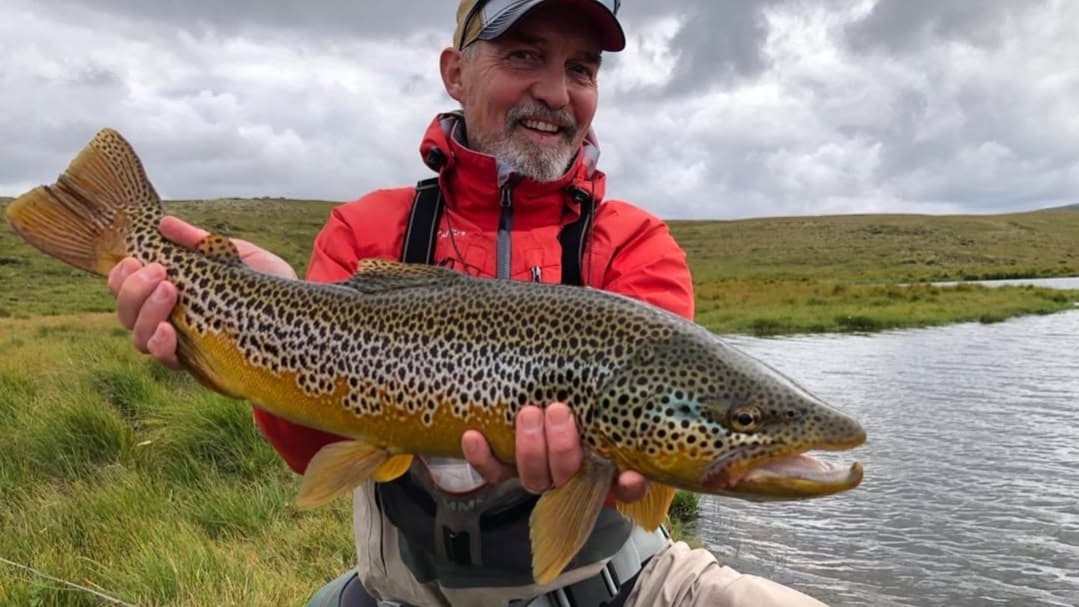
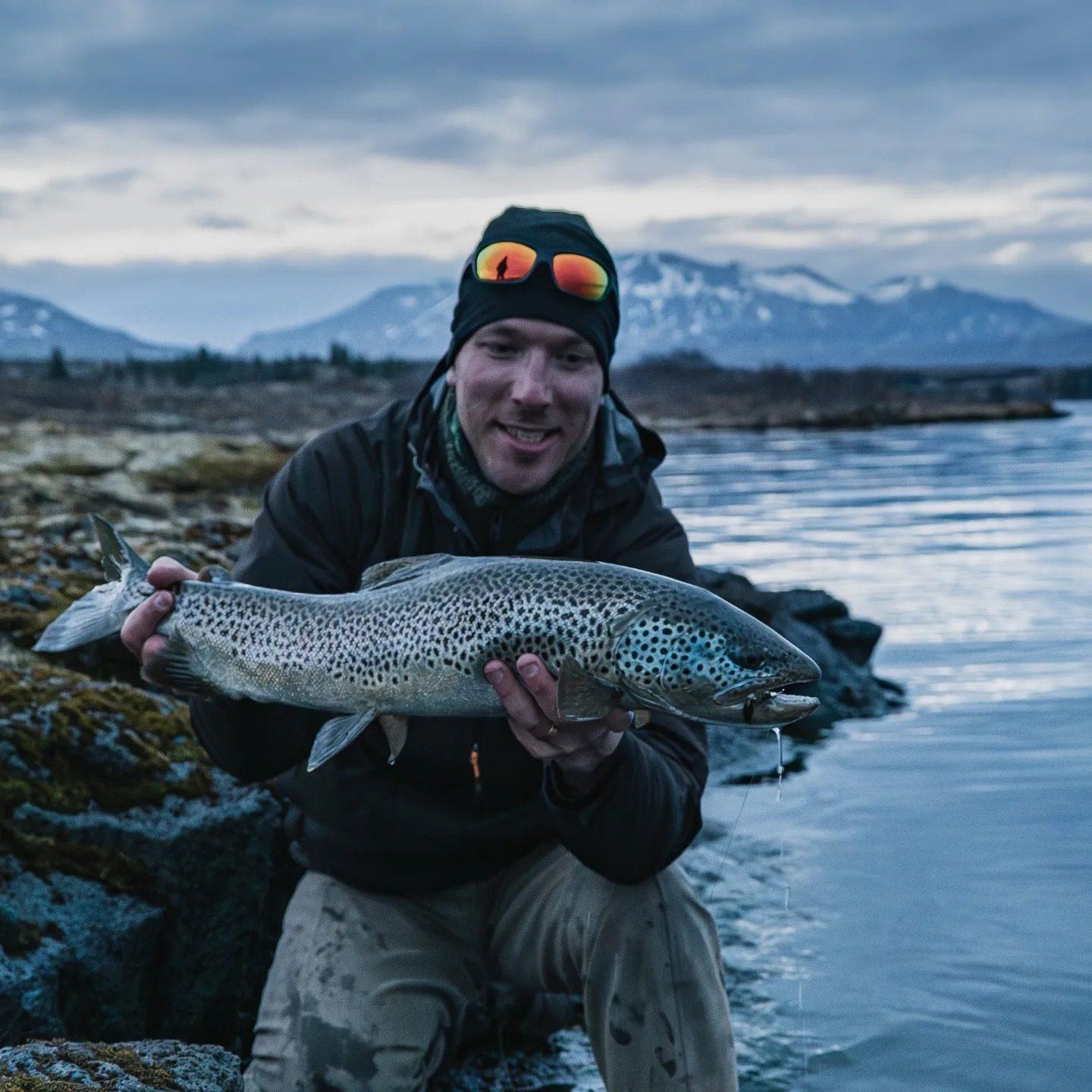
Its brown trout descend from sea-run trout that moved into the lake after the last Ice Age, which is why anglers call them ice-age browns. They feed mainly on the lake's small Arctic char and grow very large: most fish caught weigh 2.5 to 6 kg, and several fish over 20 lb (9 kg) are landed every year. The lake is also home to four different forms of Arctic char.
The best time for the big browns is from late April to June, and again in August and September, when they come back to the shore. A 6 to 8 weight rod and a strong leader are a good choice for these fish.
Fishing seasons in Iceland
The trout and char season runs roughly from April to September, and salmon fishing from 1 June to 30 September. Each river or lake sets its own dates within those limits: some trout rivers open on 1 April, the first Highland rivers in mid-May, and the Veiðivötn lakes in the second half of June.
- April: the season opens on 1 April on many trout and sea trout rivers, and on Lake Þingvallavatn on 20 April. Streamers and small midge nymphs work best, and the weather can still be wintry.
- May: the best month for the big brown trout of Lake Þingvallavatn, where only fly fishing is allowed and all brown trout must be released until 31 May. The Highland rivers open in mid-May, and the first hatches bring the first dry-fly days.
- June: all trout and char waters are open, and the earliest salmon rivers open in the first days of June. Around the solstice on 21 June there are about 21 hours of daylight, and the dry-fly season runs into early August.
- July: the salmon runs usually peak in mid to late July, and steady hatches keep the trout and char fishing good. On Lake Þingvallavatn, Arctic char become the main catch.
- August: salmon fishing is in full swing, and sea trout return to the rivers of the south coast. The big browns of Lake Þingvallavatn move back towards the shore, and streamers and nymphs start to work better than dry flies.
- September and October: prime time for sea trout. Trout and char waters close between 1 September and 1 October, while the sea trout rivers and a few salmon rivers, such as the Rangá rivers, stay open into October. The last waters close around 20 October.
No salmon river may stay open longer than three and a half months, so the earliest rivers close in mid-September.
Where to fly fish in Iceland
Iceland's rivers fall into three types: rivers fed by rain and snowmelt, spring-fed rivers, and glacial rivers. For fly fishing, the clear spring-fed and run-off rivers are the ones to look for, because glacial water is often too cloudy to see the fish.
- South Iceland and the Golden Circle: the easiest region to reach from Reykjavík, with Lake Þingvallavatn, Laugarvatn and many trout and char rivers within about an hour's drive.
- West Iceland: home to many of the best-known salmon rivers, including the early-opening rivers of Borgarfjörður.
- North Iceland: famous for big brown trout and Arctic char, and for salmon rivers further from the crowds.
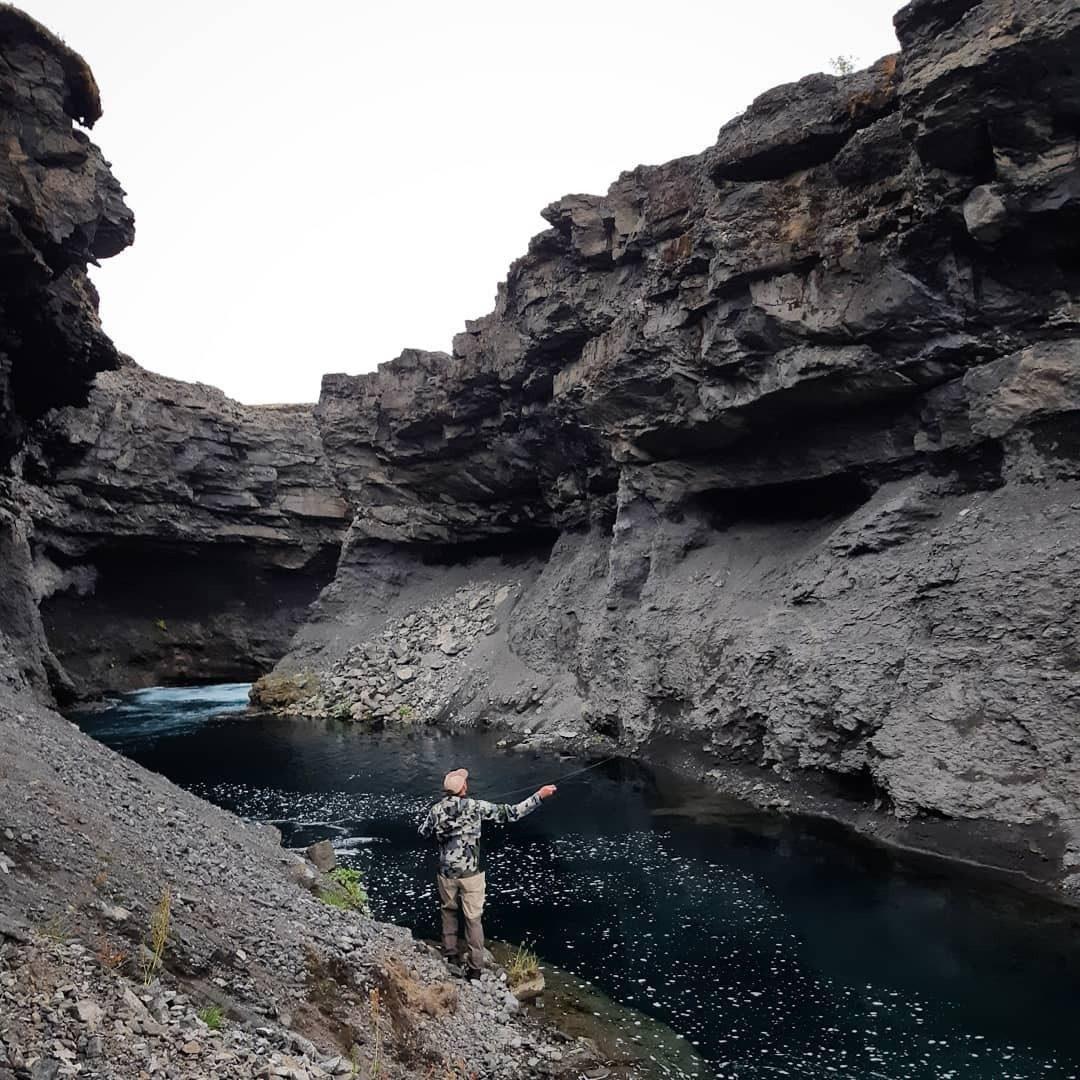
Rivers our guides fish near Laugarvatn
Our Icelandic guides fish a group of rivers around Laugarvatn, on the Golden Circle, about an hour's drive from Reykjavík. Each one fishes a little differently:
- Hólaá: Arctic char and brown trout, near Laugarvatn. Warm water flows into the river, and brown trout are common in spring.
- Brúará: mainly Arctic char, with some brown trout. Iceland's second-largest spring-fed river, about 85 km from Reykjavík, best suited to experienced anglers.
- Andalækur og Fullsæll: mainly brown trout, with some Arctic char, on a stretch of about 2 km.
- Djúpá: a spring-fed, crystal-clear and completely private river, ideal for sight fishing. Mainly Arctic char up to about 6 lb, with the occasional brown trout.
The guide chooses the river for each day based on the conditions, the season and the anglers in the group. Sea trout fishing on the south coast can be added as an extra day.
Other waters our guides fish
Our local guides also fish waters across the rest of the country:
- Lake Þingvallavatn: big brown trout in spring and Arctic char, about 45 minutes from Reykjavík.
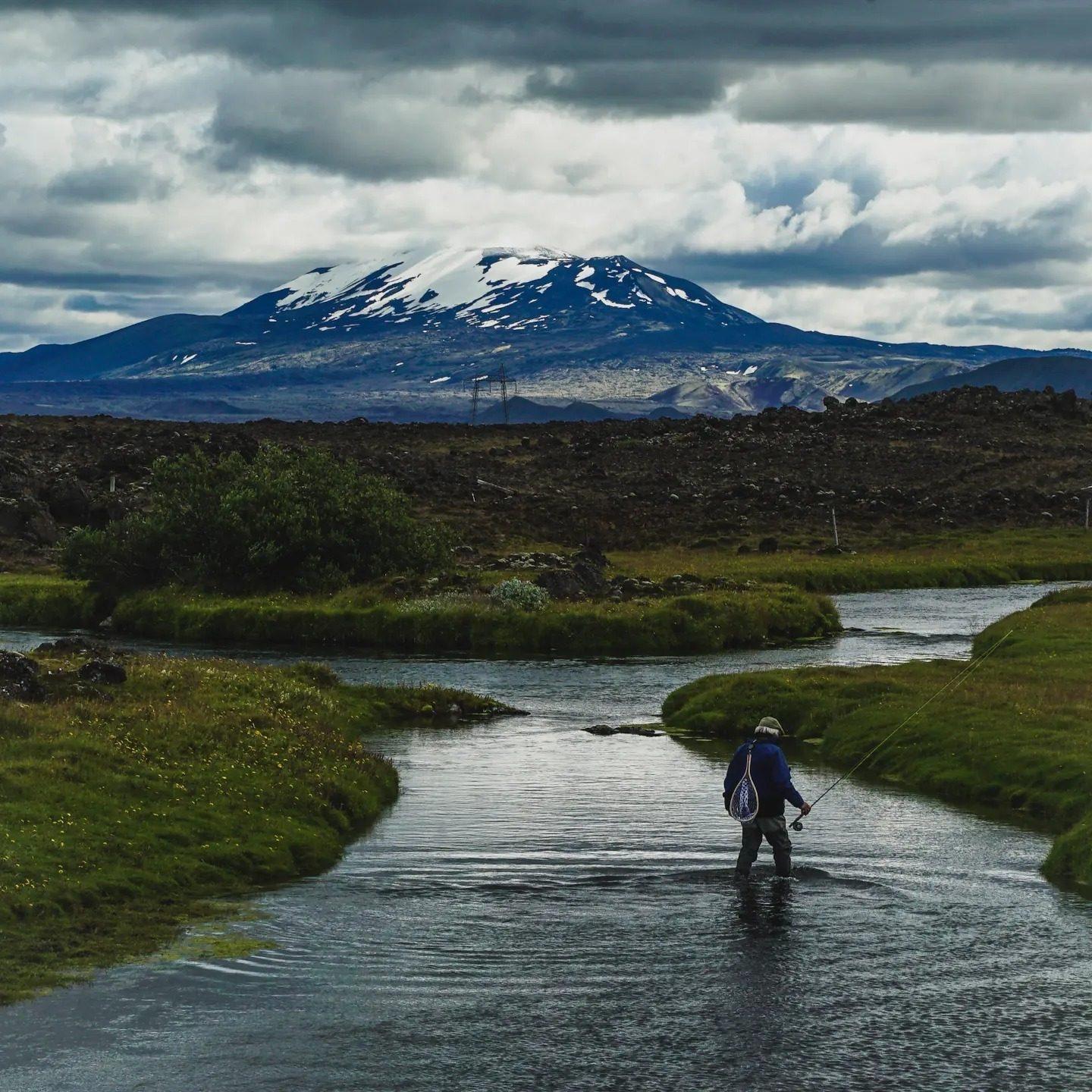
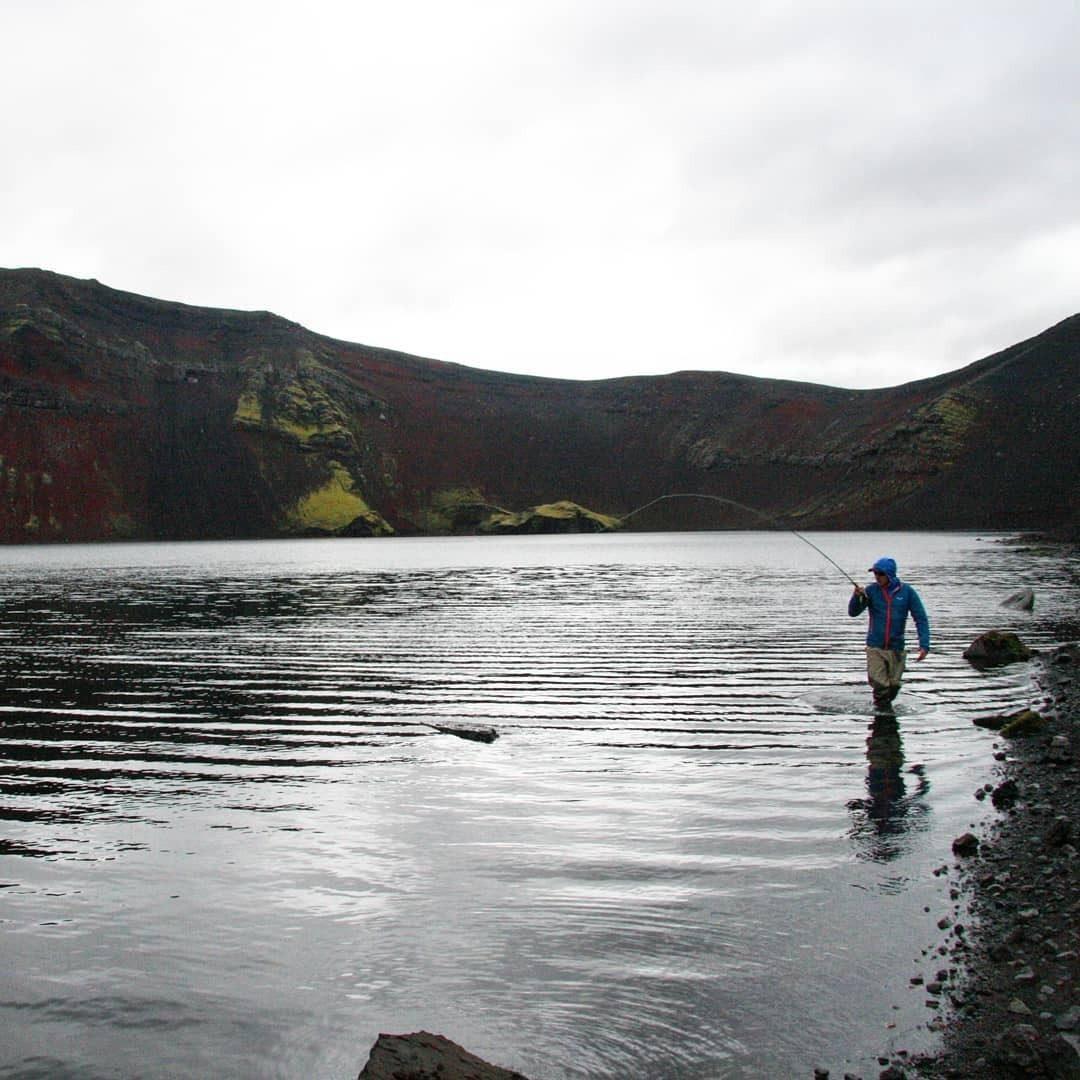
- The Highlands: the Tungná, the Kaldakvísl, the crater lake Ljótipollur and the Veiðivötn lakes around Hrauneyjar, about two hours' drive from Reykjavík. The Tungná was once a milky glacial river and now runs clear, so you can sight-fish for brown trout and Arctic char that average 3 to 5 lb, with some up to 12 lb. The Kaldakvísl is known for Arctic char of 3 to 4 lb on average. Veiðivötn is a group of about 50 crater lakes with native brown trout of mostly 1 to 3 kg. The Highland rivers open in mid-May, and the roads to the lakes usually open in mid-June.
- South Iceland: salmon on the Ytri-Rangá, Iceland's most productive salmon river (5,690 salmon in 2025), and on the Stóra Laxá, known for big multi-winter salmon. Sea trout run up the glacial Þjórsá. The spring creek Minnivallalækur is fly-only and catch-and-release, with only a few rods a day; its brown trout average 1 to 2 kg, and fish of 5 to 8 kg are caught every season.
- West Iceland: the River Lýsa on the Snæfellsnes peninsula, for salmon and trout.
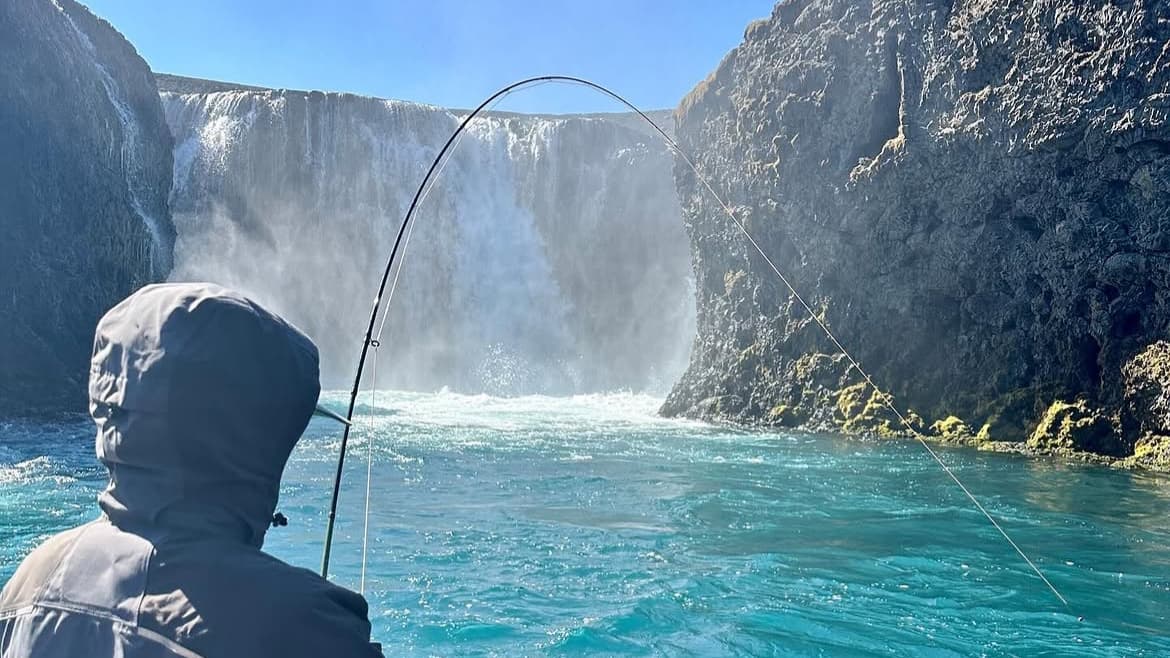
- North and East Iceland: the Víðidalsá in the north and the Jökla in the east. The Jökla was a cloudy glacial river until a hydro dam upstream made it run clear in summer. It now flows through the Stuðlagil canyon and produces salmon of over 100 cm every year. Egilsstaðir, the nearest town, is about an hour's flight from Reykjavík.
Sea trout on the south coast
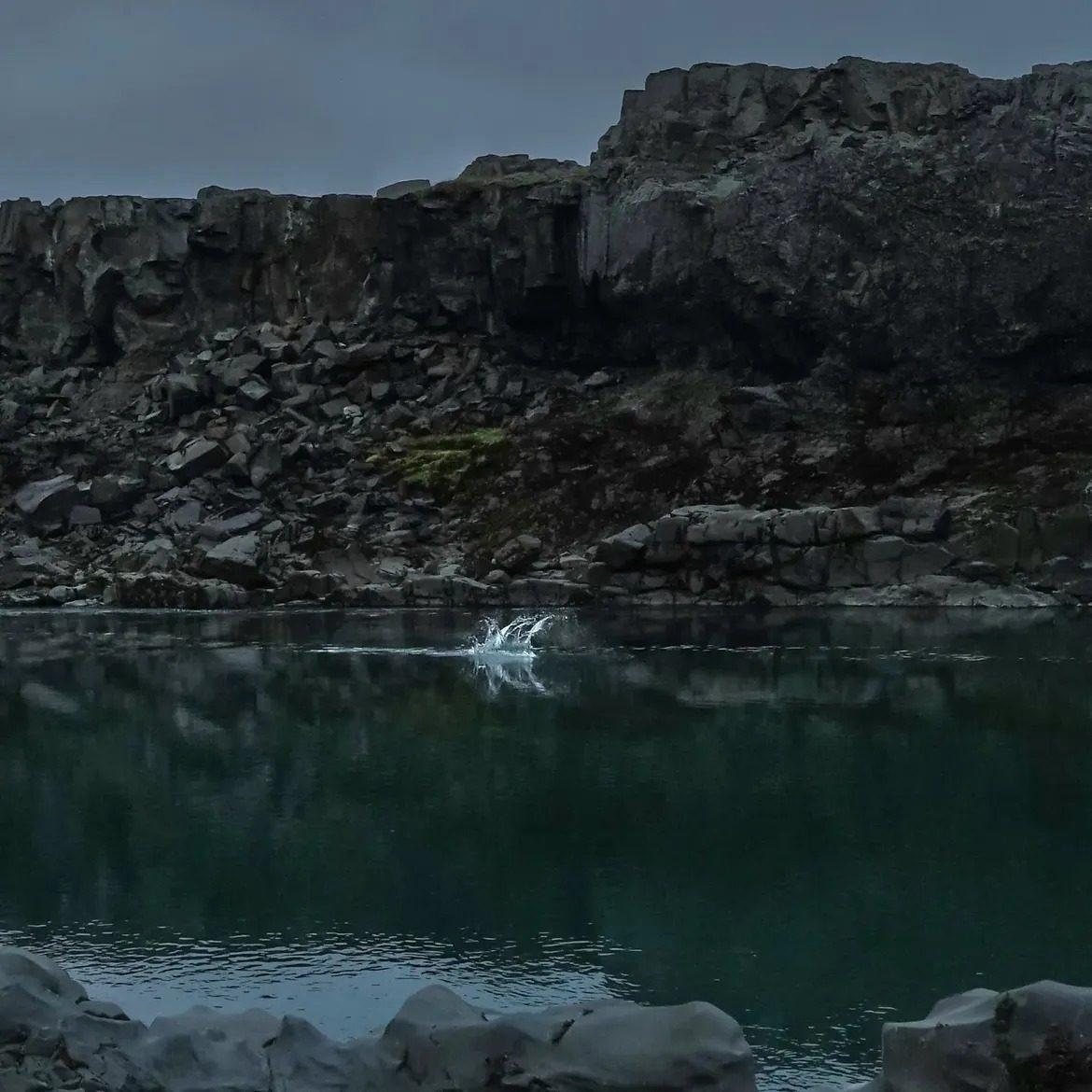
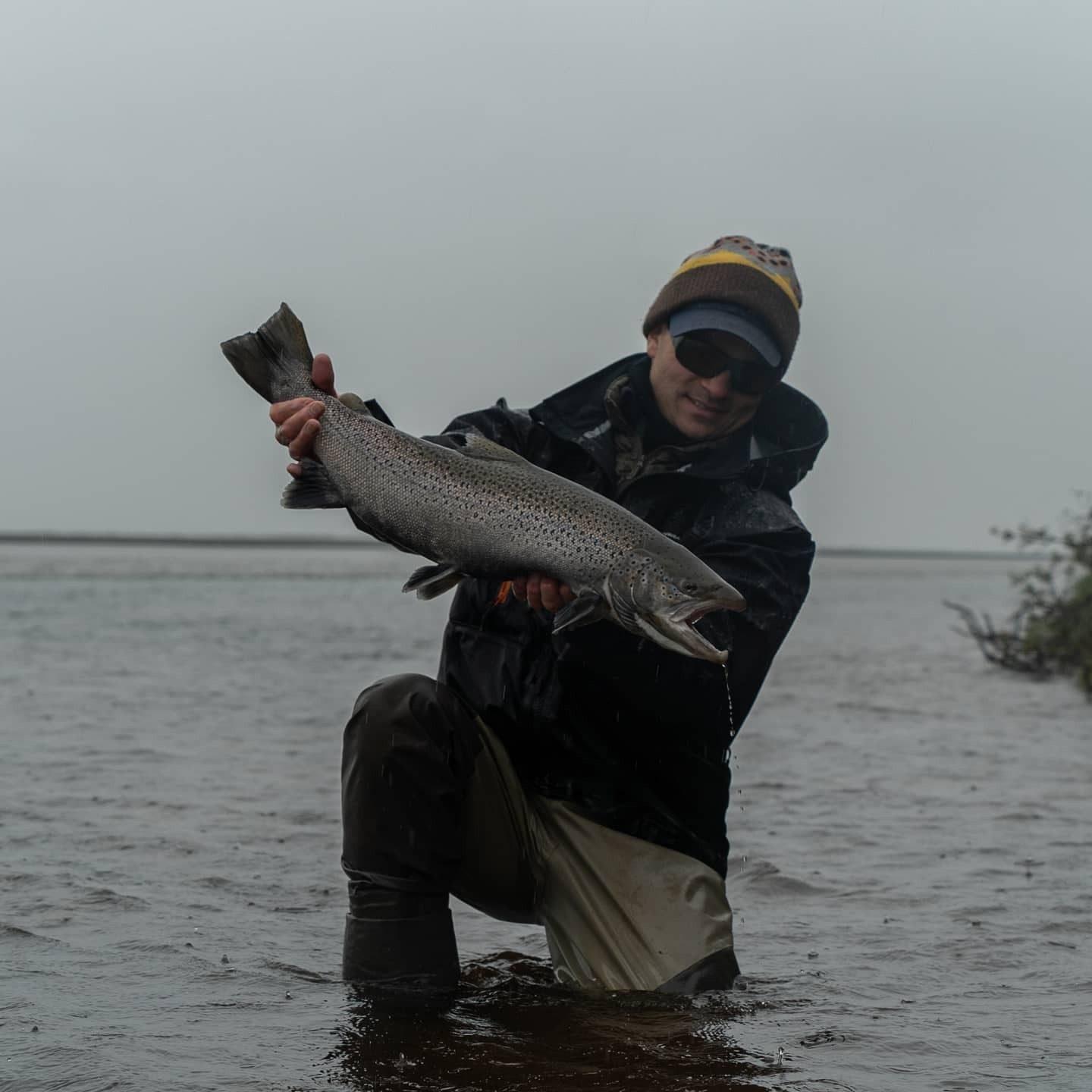
Iceland's south coast, between Vík and Kirkjubæjarklaustur, has some of the best sea trout fishing anywhere. Near Kirkjubæjarklaustur, the clear rivers Fossálar, Geirlandsá and Hörgsá meet the glacial Skaftá at Vatnamót. Every sea trout heading up those rivers passes through Vatnamót, where fish over 20 lb are not uncommon. The Fossálar runs through a lava field from the Laki eruption of 1783, and the Geirlandsá through a canyon of clear pools below a waterfall. The Tungufljót is known for the high average weight of its sea trout.
The sea trout season runs from April to October. In April and May, fish that wintered in the rivers head back to the sea, and from August fresh fish run up from the ocean, with September and October as prime time.
Fishing permits and costs in Iceland
There is no national fishing licence for rivers in Iceland. Most rivers and lakes are privately owned, and a fishing association of landowners sets the rules for each water and sells the permits. You buy a permit for a specific river, beat or lake, usually per rod per day.
Permits for rivers are sold as whole days or as "afternoon to noon", and rod fishing is allowed between 7 am and sunset, for a maximum of 12 hours a day. Salmon permits on the best rivers in July and August are among the most expensive in the world, while trout and char permits cost much less.
Fishing gear and the disinfection rule
Iceland's freshwater fish have never had diseases such as Gyrodactylus salaris, and the country protects them strictly. Used fishing gear, including rods, reels, flies, waders and boots, must be disinfected before you fish in Icelandic waters.
The simplest option is to fish with the guide's gear. Rods, reels, waders and flies are provided, so you can travel with nothing to disinfect.
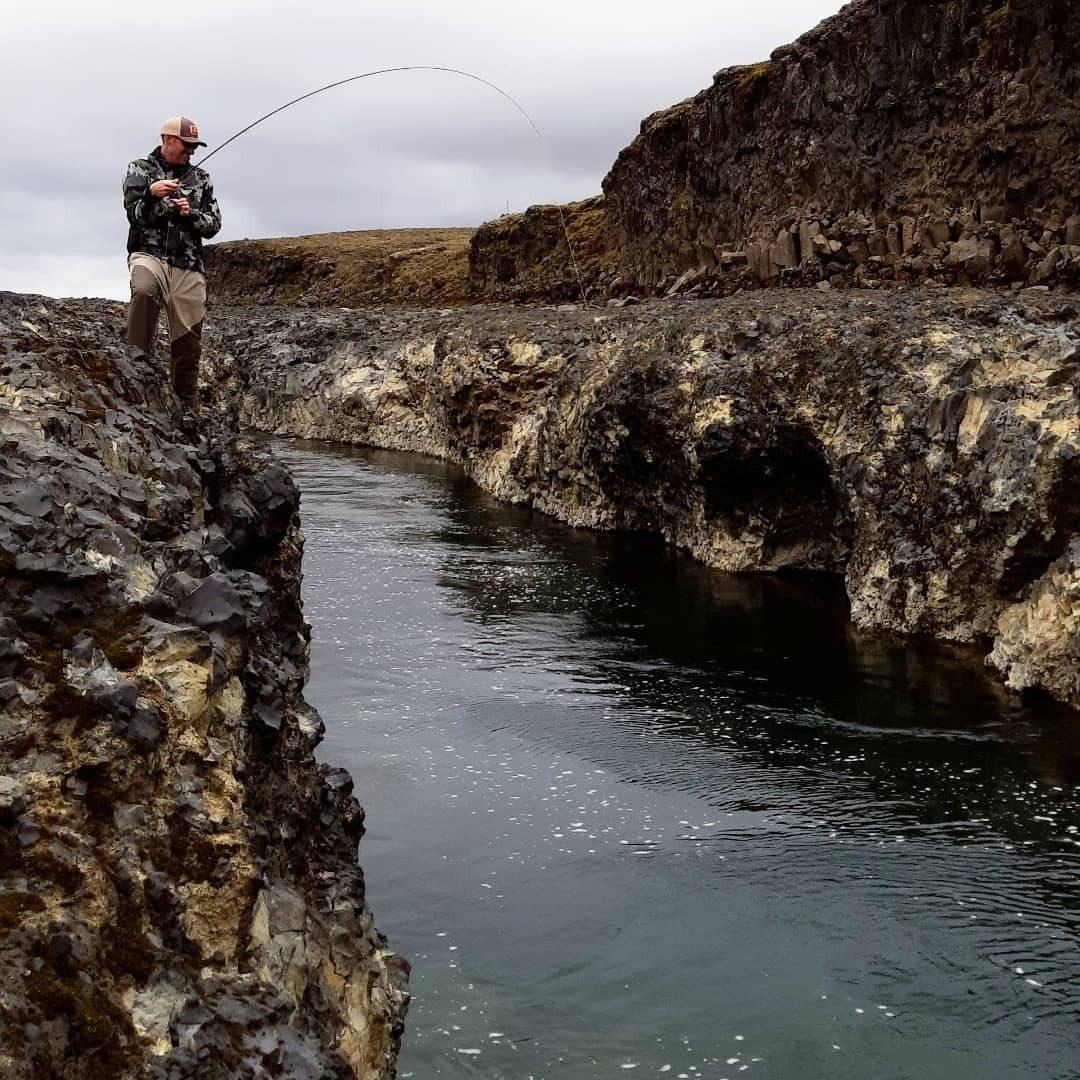
For trout and char in rivers, a 9 ft rod for a 5 or 6 weight line is a good all-round choice, and a 6 to 8 weight suits the big browns of Lake Þingvallavatn. Wind is often the biggest challenge, so it pays to practise casting before the trip. Bring layers, a rain jacket and polarised sunglasses: even in June, temperatures in Reykjavík are usually only 7 to 13°C, and the weather changes quickly.
Flies that work in Iceland
Your guide brings the flies, but these Icelandic favourites are good to know:
- Peacock: a nymph by the Icelandic fly tier Kolbeinn Grímsson and probably the most used nymph in Iceland for trout and char.
- Krókurinn: a small nymph by Gylfi Kristjánsson that imitates a hatching midge, and the go-to fly for Arctic char.
- Pheasant Tail: the classic nymph works in Iceland just as well as anywhere else.
- Black Ghost: a streamer that is among the most productive flies in Icelandic trout catch logs. The olive version is a favourite for the big browns of Lake Þingvallavatn.
In summer, midges and caddis hatch on many waters, and dry flies from size 12 down to size 24 can bring big trout and char to the surface.
Guided fly fishing in Iceland
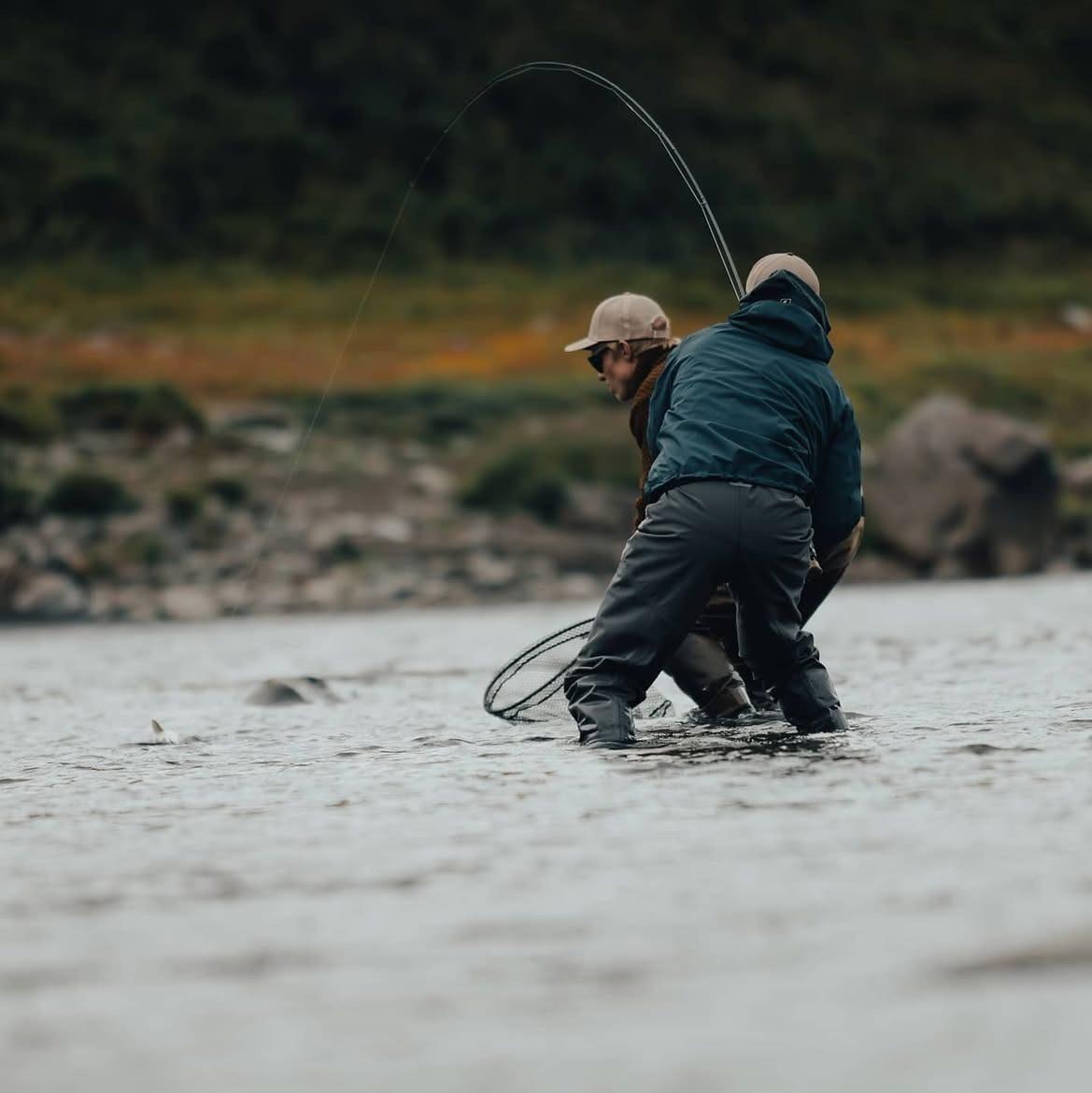
A guide takes care of the parts that are hardest to arrange from abroad: permits on private rivers, access to the best beats, transport between rivers and gear that is ready to fish.
- Included: the guide, fishing permits, rods, reels, waders and flies, and transport between the rivers.
- Not included: accommodation and meals. Your guide can suggest places to stay, from a private cottage near the rivers to hotels with breakfast.
- Group size: one guide usually takes up to two anglers, so a group of four fishes with two guides.
Browse our fly fishing guides in Iceland and send an enquiry with your dates and the species you want to fish for.
FAQ
Frequently Asked Questions
Short answers to what anglers ask before a Iceland trip.
When is the best time to fly fish in Iceland?
For brown trout and Arctic char, May to September, with spring often best for big browns. For salmon, July and August, and for sea trout, September and October.
Do I need a fishing licence in Iceland?
There is no national licence for rivers. You need a permit for each river or lake, sold by its owners. With a guide, the permits are included in the price of the trip.
Can I bring my own fishing gear to Iceland?
Yes, but used gear must be disinfected by a veterinarian before you travel, with a certificate, or at Keflavík Airport on arrival.
Is fly fishing in Iceland expensive?
Salmon fishing on the top rivers is very expensive. Trout and char fishing costs much less.
Where can I fly fish near Reykjavík?
Lake Þingvallavatn and the rivers around Laugarvatn, such as the Brúará, are about an hour's drive from the city.
Is Iceland good for beginner fly anglers?
Yes. With a guide and the right river, beginners can catch trout and char, while rivers like the Brúará suit experienced anglers.
How big do trout get in Iceland?
In Lake Þingvallavatn, several brown trout over 20 lb are caught every year. In the Highland rivers, trout and char average 3 to 5 lb, and on the south coast, sea trout over 20 lb are caught at Vatnamót.
What flies should I bring to Iceland?
Your guide provides the flies, but the Peacock and Pheasant Tail nymphs, the Krókurinn and the Black Ghost streamer are the classic Icelandic choices.
Useful Links (Official Resources)
- MAST – Import of used fishing equipment (disinfection)
- Þingvellir National Park – Angling on Lake Þingvallavatn
- Marine and Freshwater Research Institute – Salmon, trout and charr catch statistics
Rivers, seasons and fishing notes come from FjordAnglers' local guides in Iceland.
Written by FjordAnglersPublished November 24, 2026